Catagories
Timeline
Cities
Towns
People
Dragons
Locations
Organisations
Religions
Other Worlds
Profiles
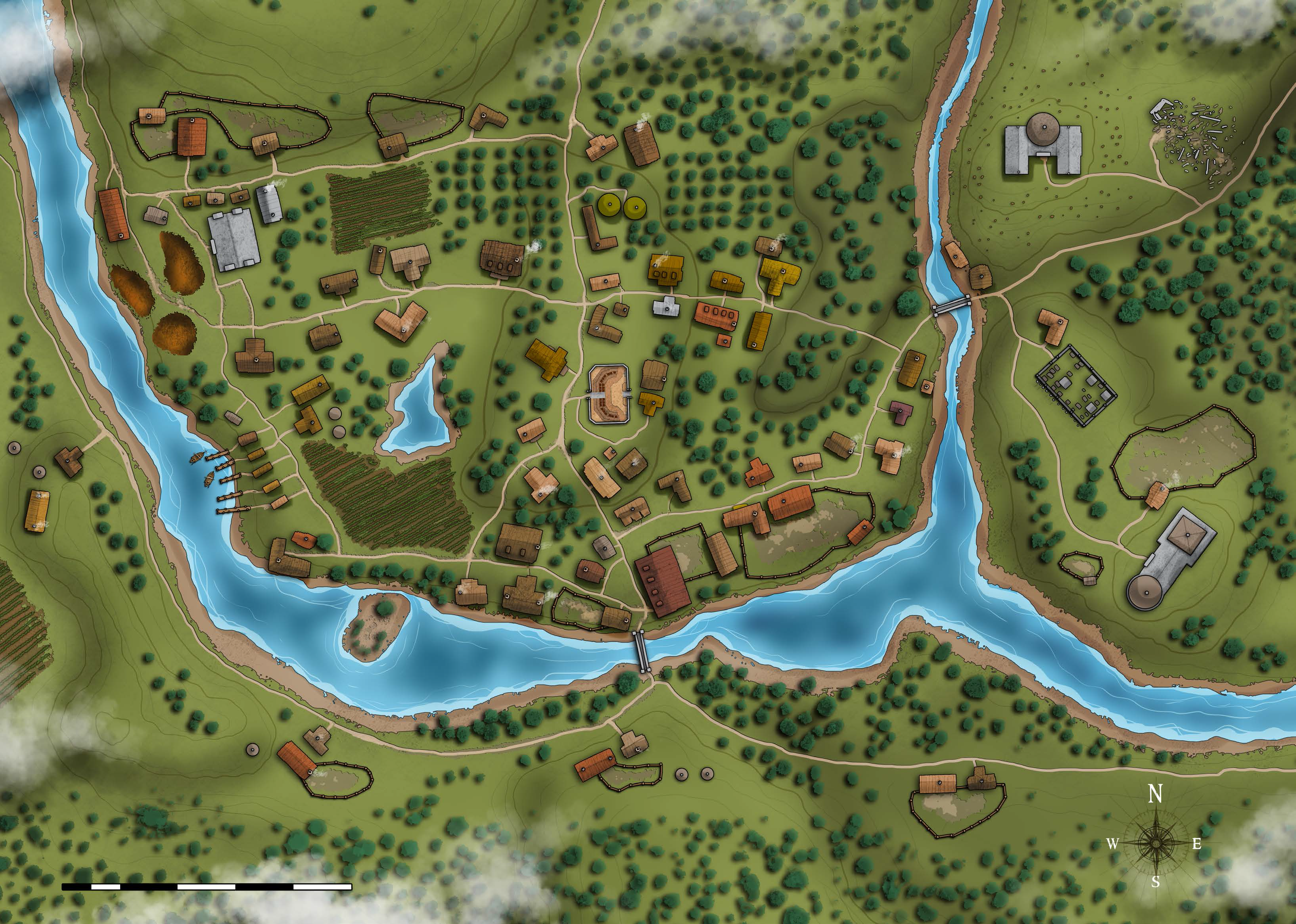
The Dragon Plague years were quite eventful for northern Taldor. During the years between 3660 and 3672 ar, the region endured an explosion of violent and bloody depredations by no fewer than three dozen different dragons. Among those affected by the attacks was a young woman named Tula Crowhallow, who lost her family when a black dragon named Aeteperax destroyed her hometown of Nazilli on the southern edge of the Verduran Forest. She would go on to become a great hero, and the mercenary company she founded—the Slayers of Nazilli—defeated more dragons than any other group in those days. Her final triumph was slaying Aeteperax in the heart of a swampland deep in the part of the Verduran Forest known today as Dragonfen. For her service, the Taldan emperor awarded Tula the title of Baroness and the stewardship of the Verduran Fork region, including all of Dragonfen. Her legions of admirers soon refounded an old town, Belheim, and renamed it to bear her name, its buildings built of limestone quarried nearby. In 3676 ar, as Crowhallow was still finding its place in the world, a band of Iroran priests presented themselves before the Baroness of Crowhallow and asked her permission to build a monastery east of the town, overlooking Dragonfen.
Lady Tula graciously granted their wish, and soon thereafter, the monks built a fine monastery on the far side of the swamp.
The Iroran sect grew and prospered in this setting along with Crowhallow, and over the years developed strong ties to the town. Lady Tula eventually married one of her fellow Slayers, Arturic Canteclure, and built a castle atop one of the town’s hills. The couple had four children, but each one died of accident or misadventure before the age of 9, leaving the new barony with no heirs. Tula and Arturic’s relationship grew strained as the baroness grew morbid and obsessed with building a grand tomb for herself and her family. As she and her husband grew apart, Tula amended her will to have Arturic buried in a separate part of the tomb, rather than alongside her. The bodies were found by servants soon thereafter, and Crowhallow mourned a tragedy they couldn’t understand or comprehend. The bodies were quickly taken to Tula’s crypt and buried according to her wishes, and the site was sealed.
Rule of Crowhallow fell to distant relations of Arturic’s, the Canteclures. In 4500 ar, Baron Sarvo Canteclure, a vicious lord who imprisoned subjects for the slightest infraction, joined an ill-advised rebellion against the Grand Prince, and his family and the castle were destroyed in retaliation. Upheaval was not limited to the town of Crowhallow that year, though. A month prior to the razing of Castle Tula, afterwards referred to superstitiously as the Witch Tower, the monks of the Monastery of Saint Kyerixus vanished mysteriously and their home fell into ruin.
Back in Crowhallow, a man named Sir Arkold Devy was awarded the Barony of Crowhallow for his role in helping to put down the seditious Canteclures. His descendants have ruled for the past 2 centuries. During this time, a few memorable events touched the region— most notably the earthquake that left the town relatively unharmed but caused the town’s quarry to flood. With access to the quarry’s fine limestone lost, Belhaim’s fortunes slowly receded.
Residents of Crowhallow have repeatedly put forth plans to have Dragonfen drained in order to salvage the land for agricultural use and to reveal potential new quarry sites. Yet, again and again, these notions were discarded as being far too daunting and expensive. Crowhallow seems destined to be nothing more than a sleepy backwater of the Whispervale Kingdom.